Mark Gruenwald took his bow on Captain America in 1995, just a year shy of his untimely death. Like many incoming creative teams, new writer/artist combo of Mark Waid and Ron Garney seized the opportunity to take the character back to basics. Given Waid’s fondness for straightforward simplicity, and Silver Age-adherence to formula, this could have been a regressive change. And indeed, Waid wastes no time, immediately resurrecting dead girlfriend Sharon Carter while bringing the Red Skull back to the forefront. It was very traditional superhero comics, albeit very well-crafted superhero comics. This isn’t exactly damning with faint praise, as the series was already an improvement over the lukewarm final issues of the Gruenwald run. However, it remained to be seen whether the Waid/Garney duo would aspire to be anything else, or have anything more to say.
While the reset button was pressed on Gruenwald’s subplots and supporting cast, Waid is careful not to dispense with the character development that preceded him. His is a fresh take on Captain America, who nonetheless remains the sum of his experiences. In clearing the deck, he establishes a new foundation on which to build. In another time, this approach may not have been so welcomed or successful. Directly coinciding with the implosion of the ’90s speculator boom, though, this Captain America provides disheartened comics fans with something comforting and familiar. Additionally, it functions as a powerful indictment against the gritty, deconstructed, ’90s antiheroes overpopulating the comics landscape simply by virtue of being everything they weren’t.

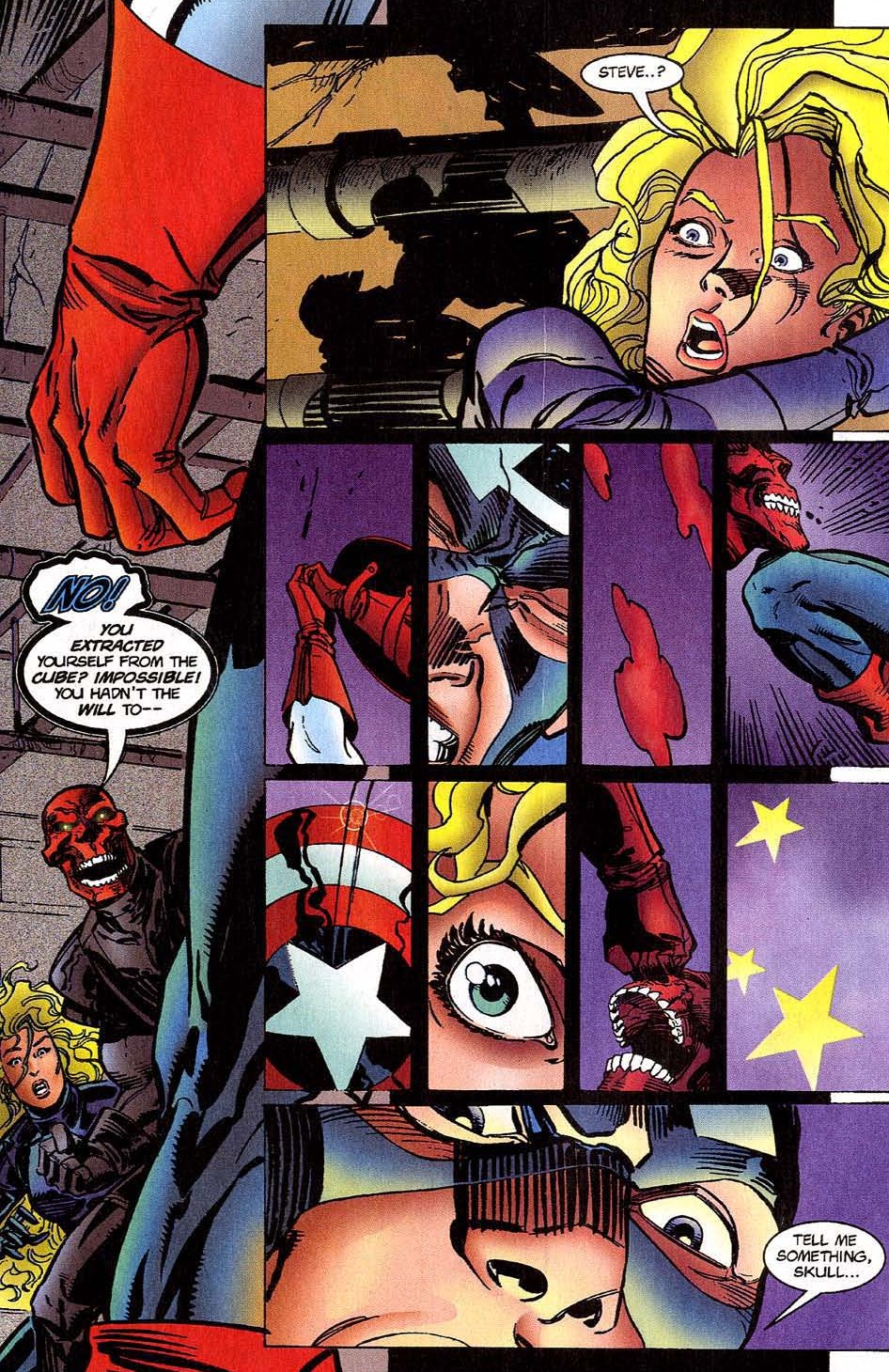
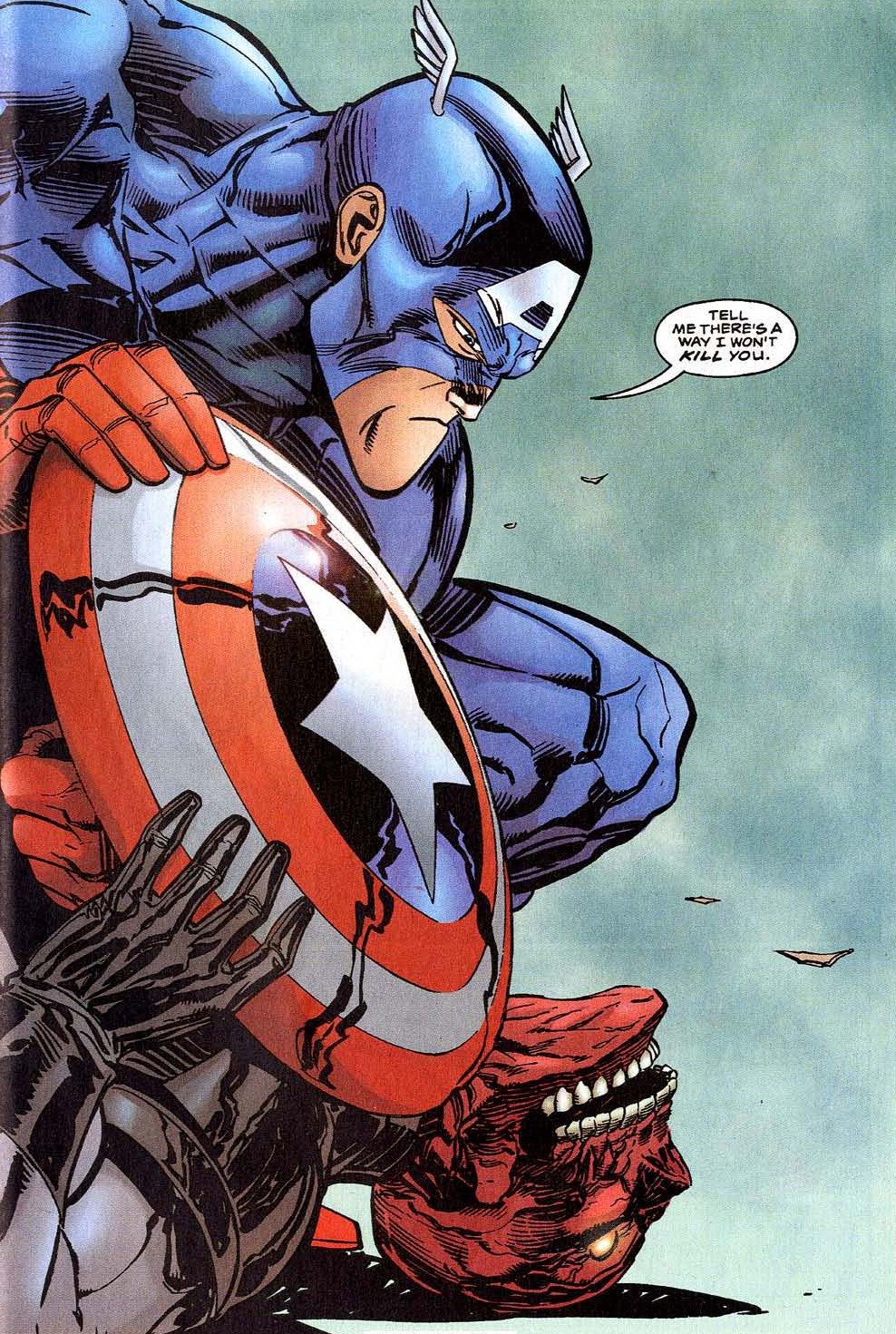
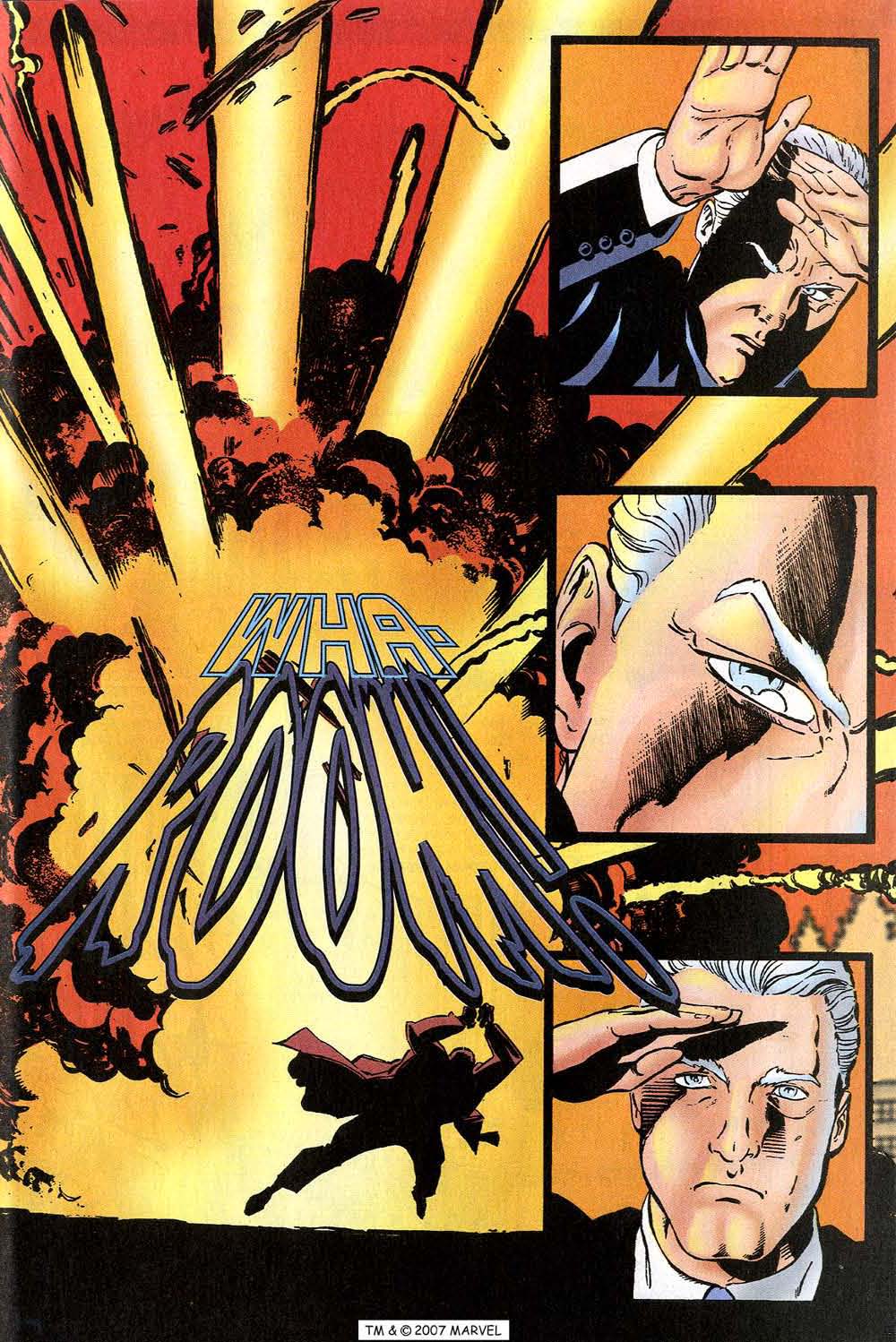
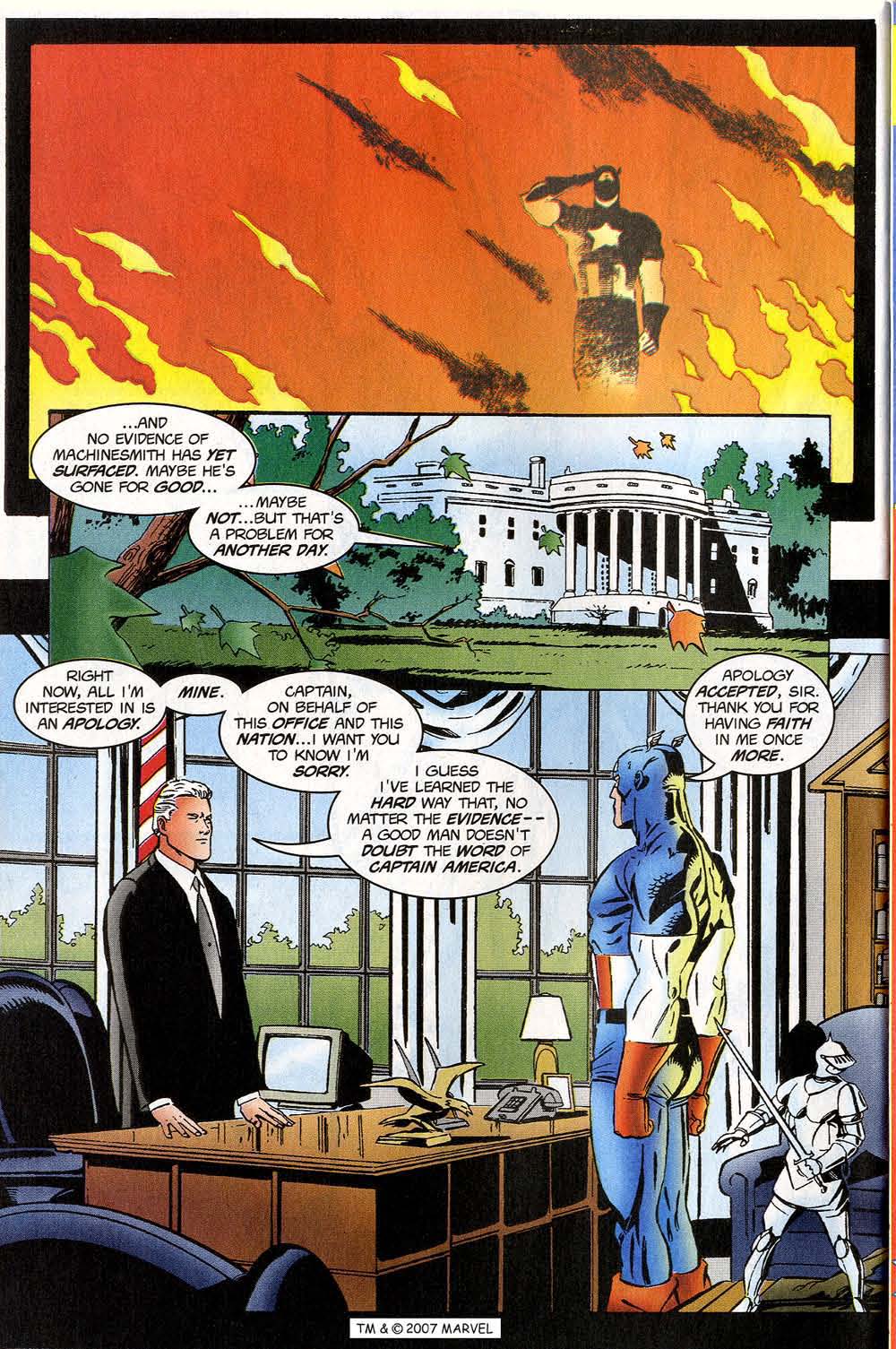
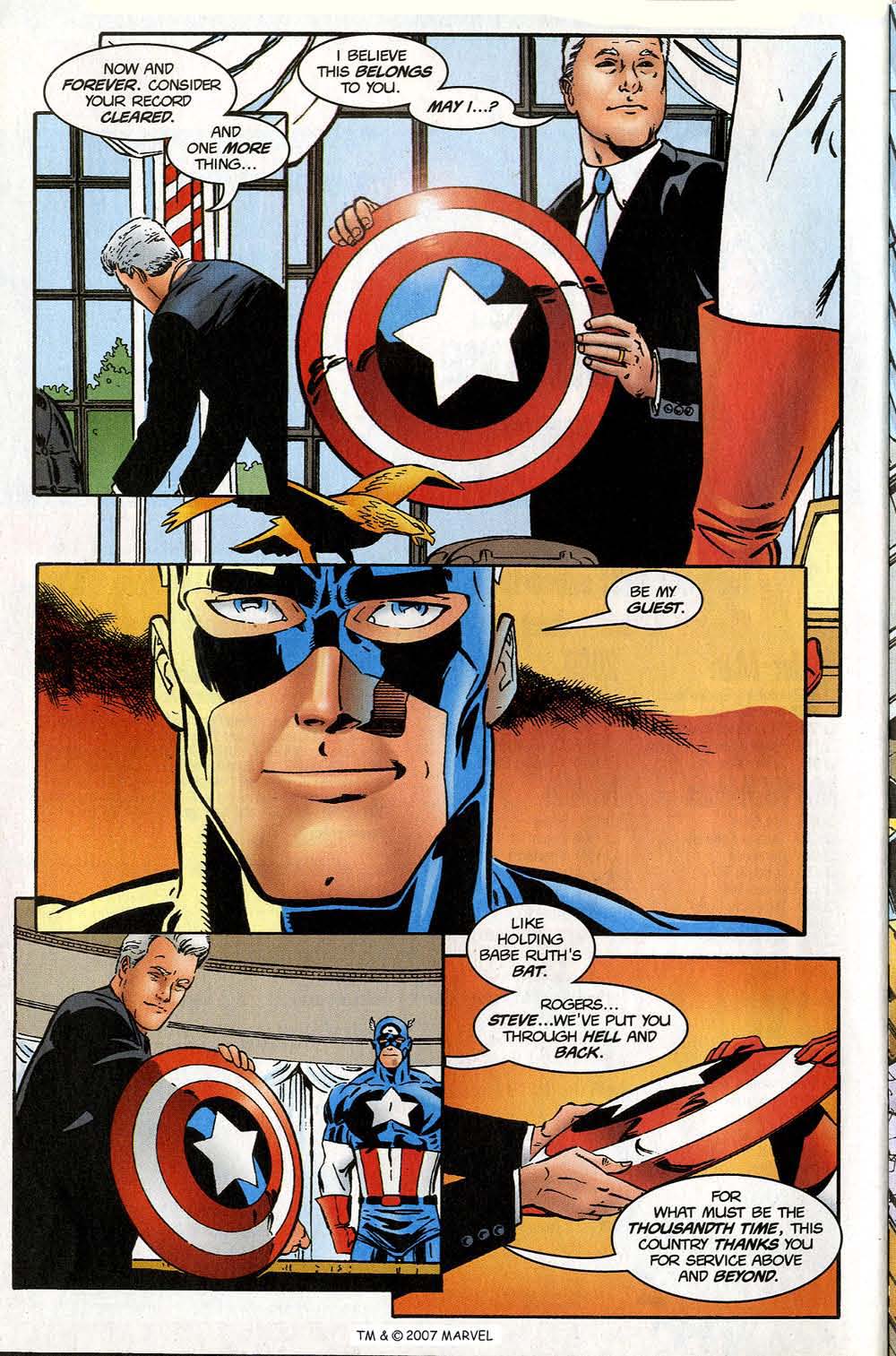
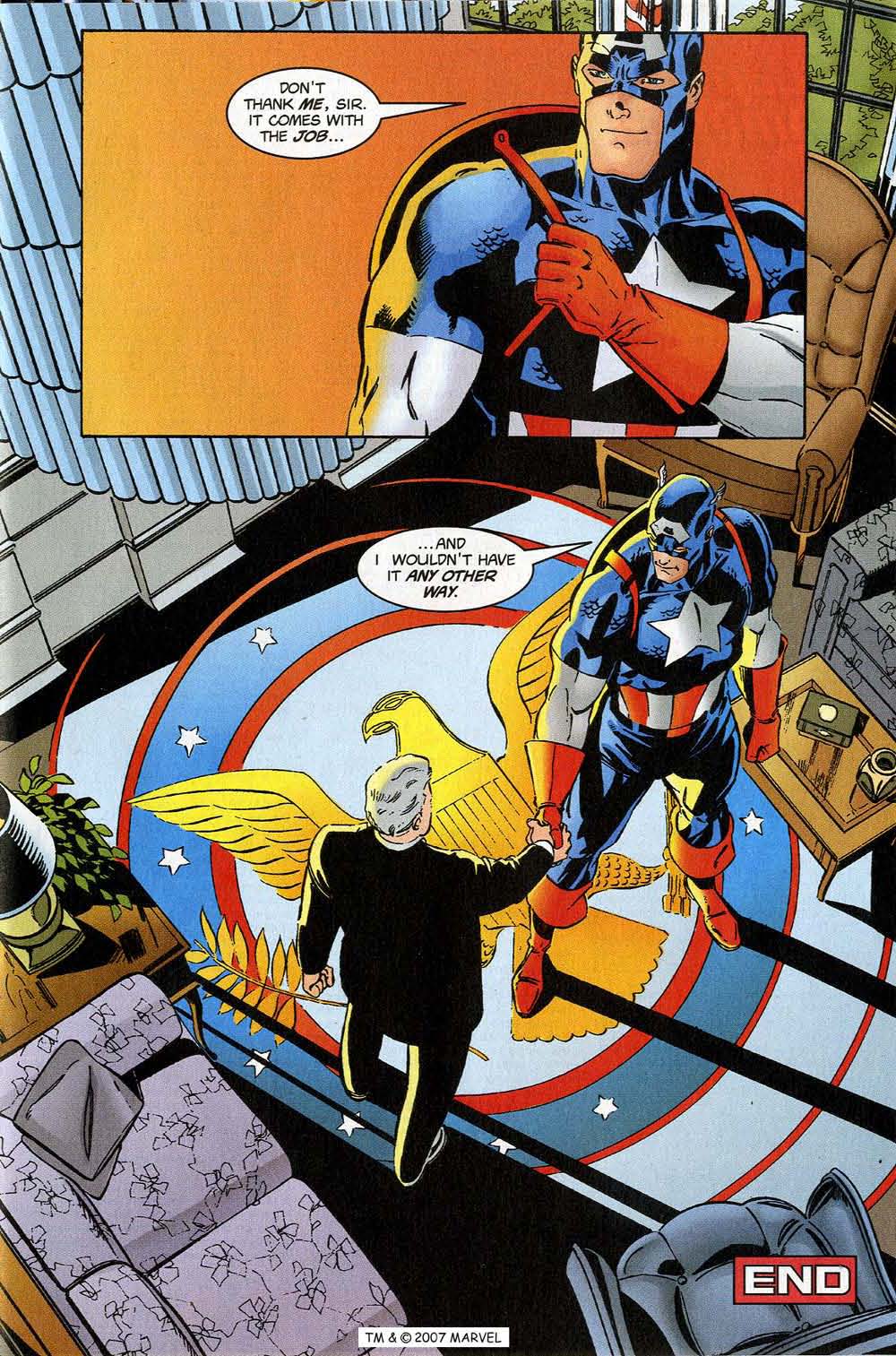
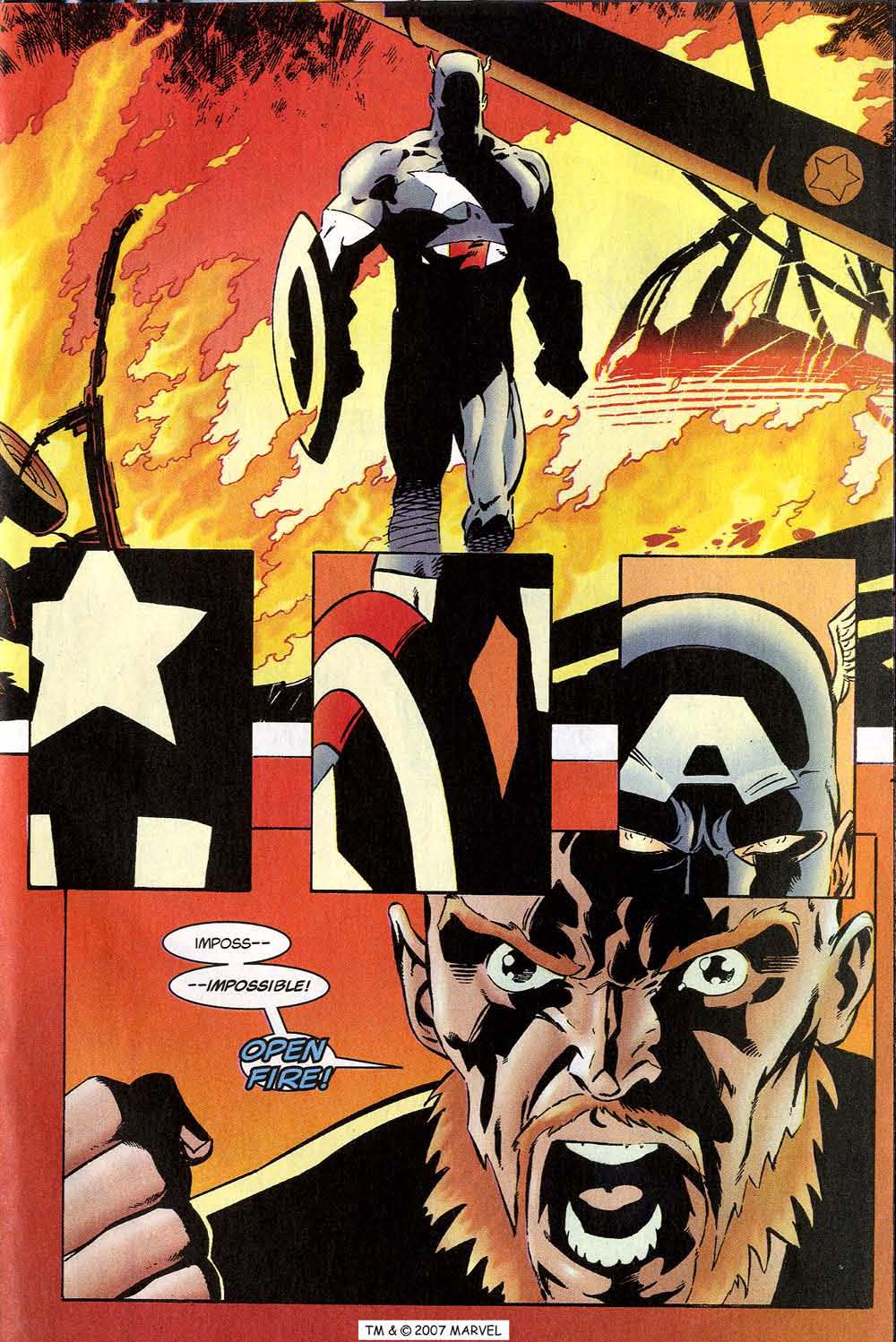
Waid’s commentary on the comics industry was undeniable, but he would soon venture into the geopolitical arena as well. Like previous writers, Waid concocts a dilemma in which Cap’s actions and idealism come into conflict with government interests. In Man Without a Country, Cap is taken to task by the President (in Bill Clinton’s likeness) for appearing to work alongside the Red Skull and disgraced S.H.I.E.L.D operative Sharon Carter. Circumstantial evidence also points to Cap leaking covert information to old nemesis (and Skull stooge), the Machinesmith. All fabricated, obviously, but incriminating enough that the President can’t afford to take any chances.
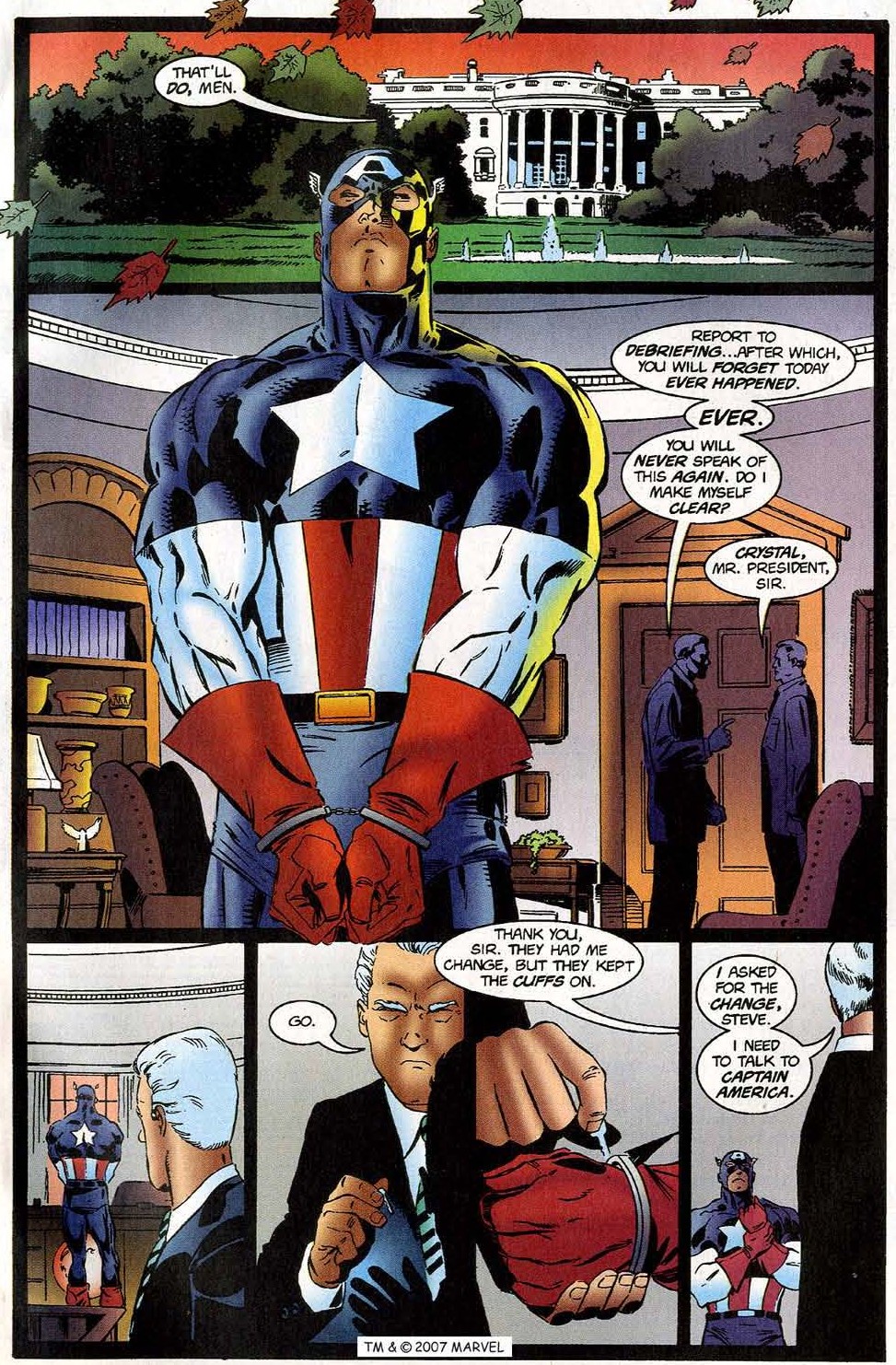
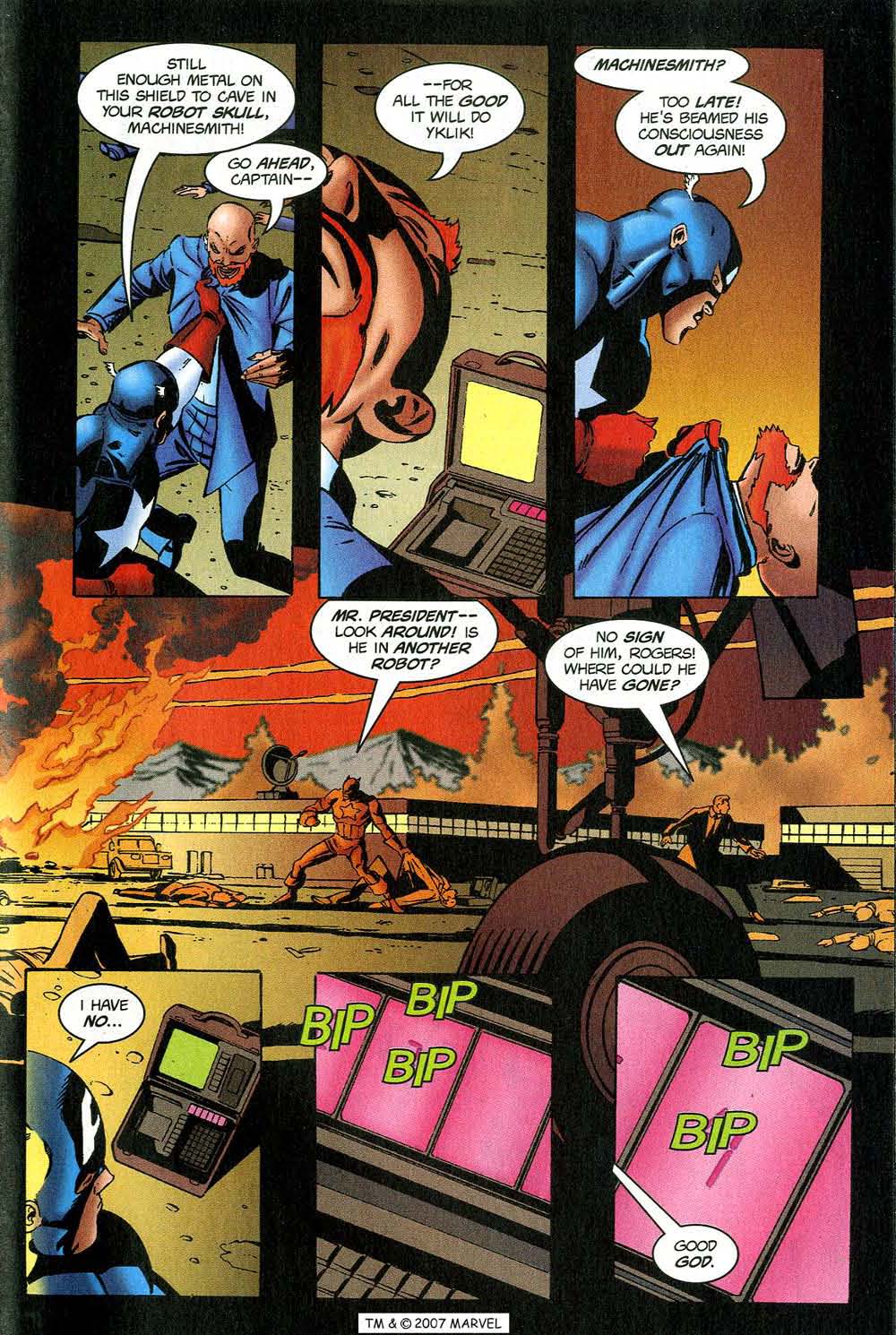
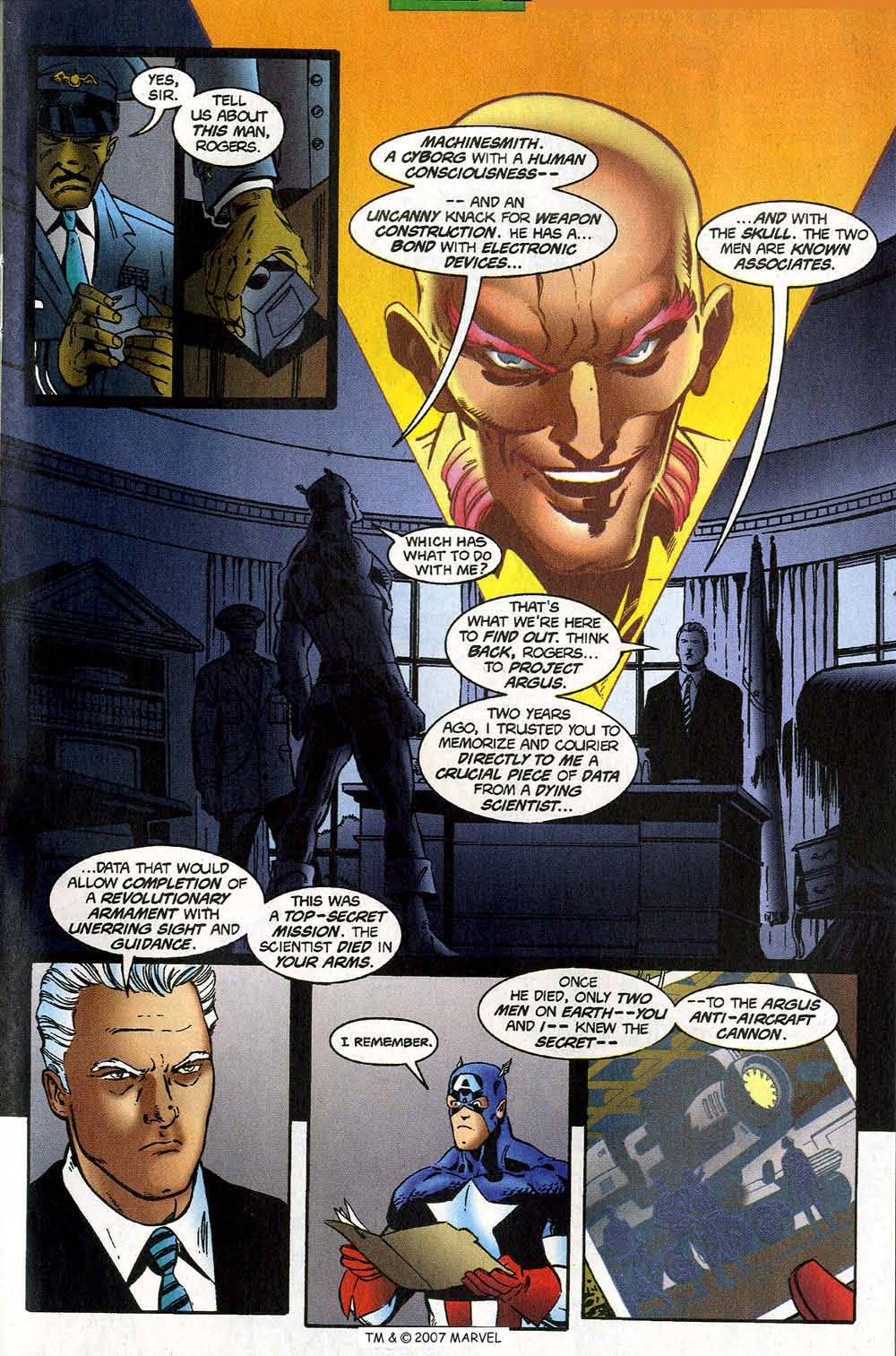 The POTUS as characterized here is pragmatic in that he respects Steve Rogers for his service to the country, but must seriously consider the possibility that he has gone rogue. At the same time, he recognizes that it would be political suicide to publicly brand Captain America a traitor. Cap is allowed his freedom, but stripped of his citizenship and exiled overseas. Meanwhile, the Machinesmith has successfully used the secrets acquired from Cap–plucked directly out of his brain in an earlier story–to build a weapon of mass destruction. As always, Cap makes the best of a bad situation and sets out to save the world.
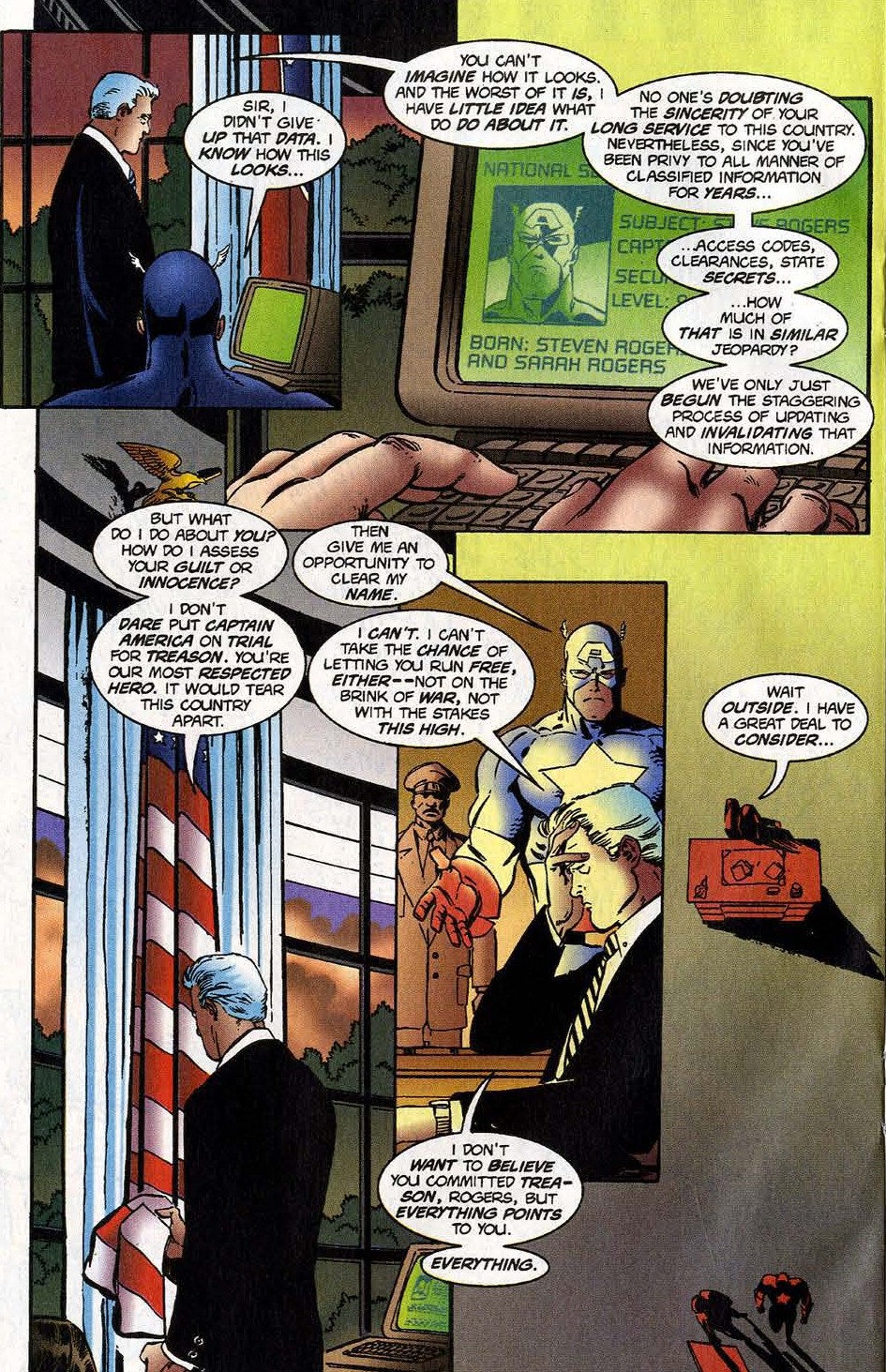

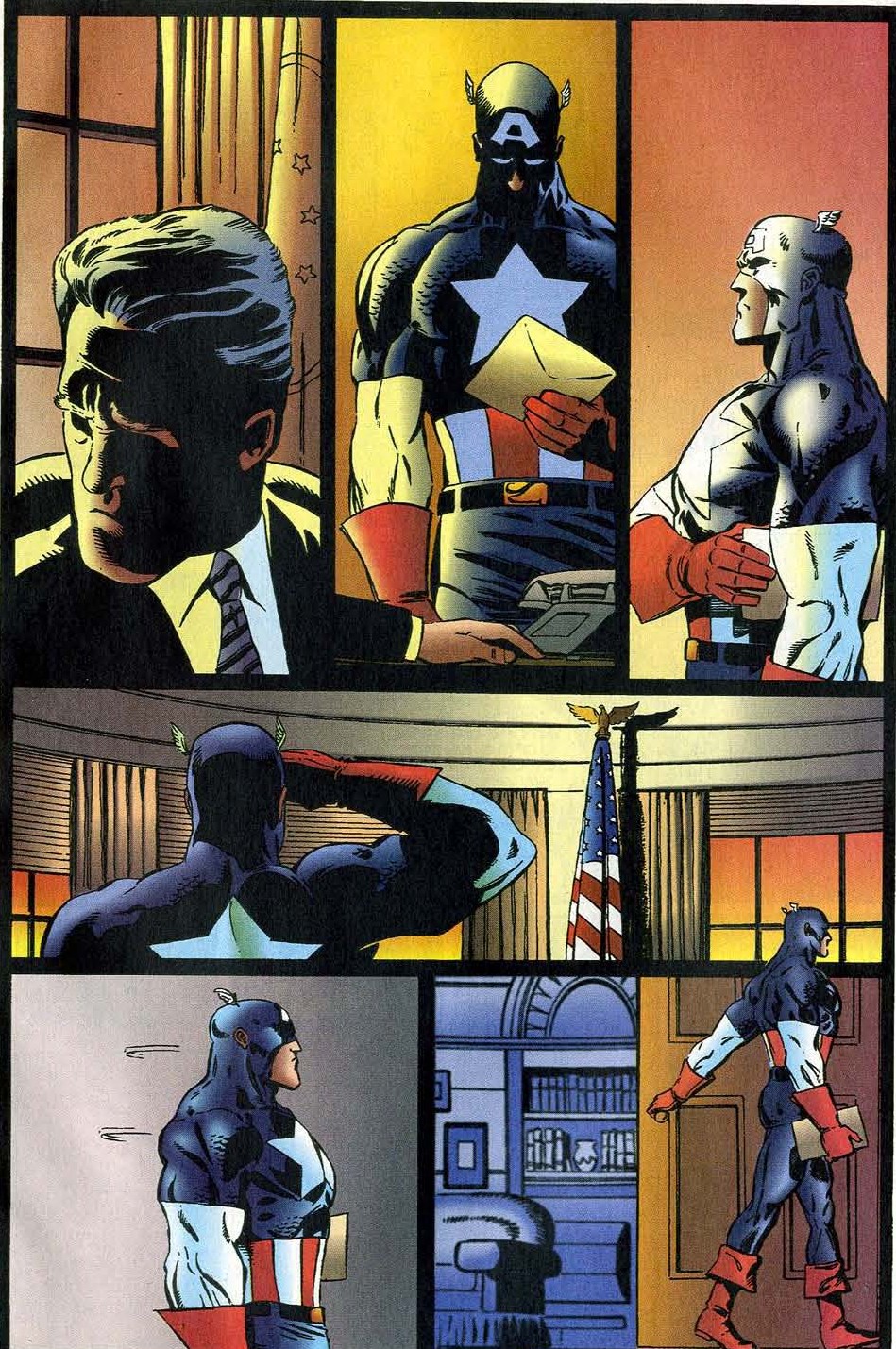
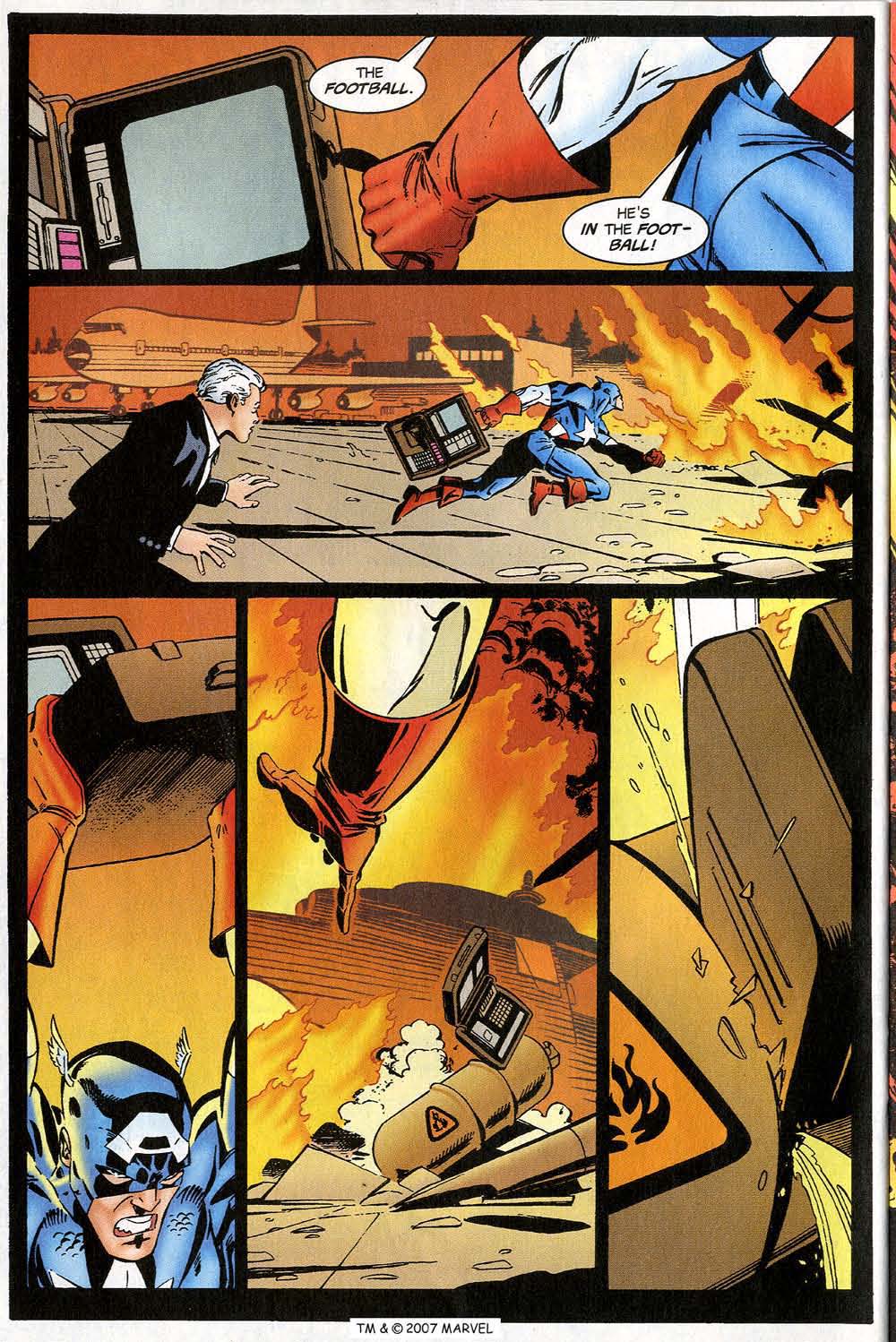
Thwarting nuclear armageddon would be challenging enough under normal conditions. But Man Without a Country goes the extra mile in pushing Cap to the limit as he must avert an earth-shaking threat with little-to-no resources or support. In doing so, he exonerates himself, proving that his country’s faith in him was not misplaced. These developments read like a foregone conclusion, but the political ramifications were consistently immaterial to Cap. He made clear that his actions were in service to the world above all else, rather than winning favor with the United States government. It’s a self-contained character-defining story that stands alongside the best.
Waid and Garney’s acclaimed stint was interrupted by Marvel’s Heroes Reborn experiment, which saw the Avengers characters shuffled off to a pocket dimension to be completely reinvented under new, high-profile creative teams. On that, the less said, the better. Waid and Garney received a second crack at the character once he returned to the Marvel Universe proper. Sadly, their collaboration, while solid, lacked a certain spark this time around. The importance of momentum in creative endeavors cannot be overlooked and the year-long Heroes Reborn stunt derailed Waid and Garney to the point that they would spend much of their comeback making up for lost time, just a touch out of step with their iconic first eleven issues.
Mark Waid and Ron Garney’s Captain America was a quick-thinking action hero hearkening back to the character’s roots. At the same time, they successfully repositioned Steve Rogers as a compelling character in his own right, not merely a foil for the enhancement of others. He was confident and unwavering in his principles in a way that was endearing instead of heavy-handed or obnoxious. While he was less of an active participant in the issues of the day, this Steve Rogers was not blind to the political realities of the world he inhabited. It’s an increasingly overlooked run that serves as a precursor to the celebrated work of a certain future creator.
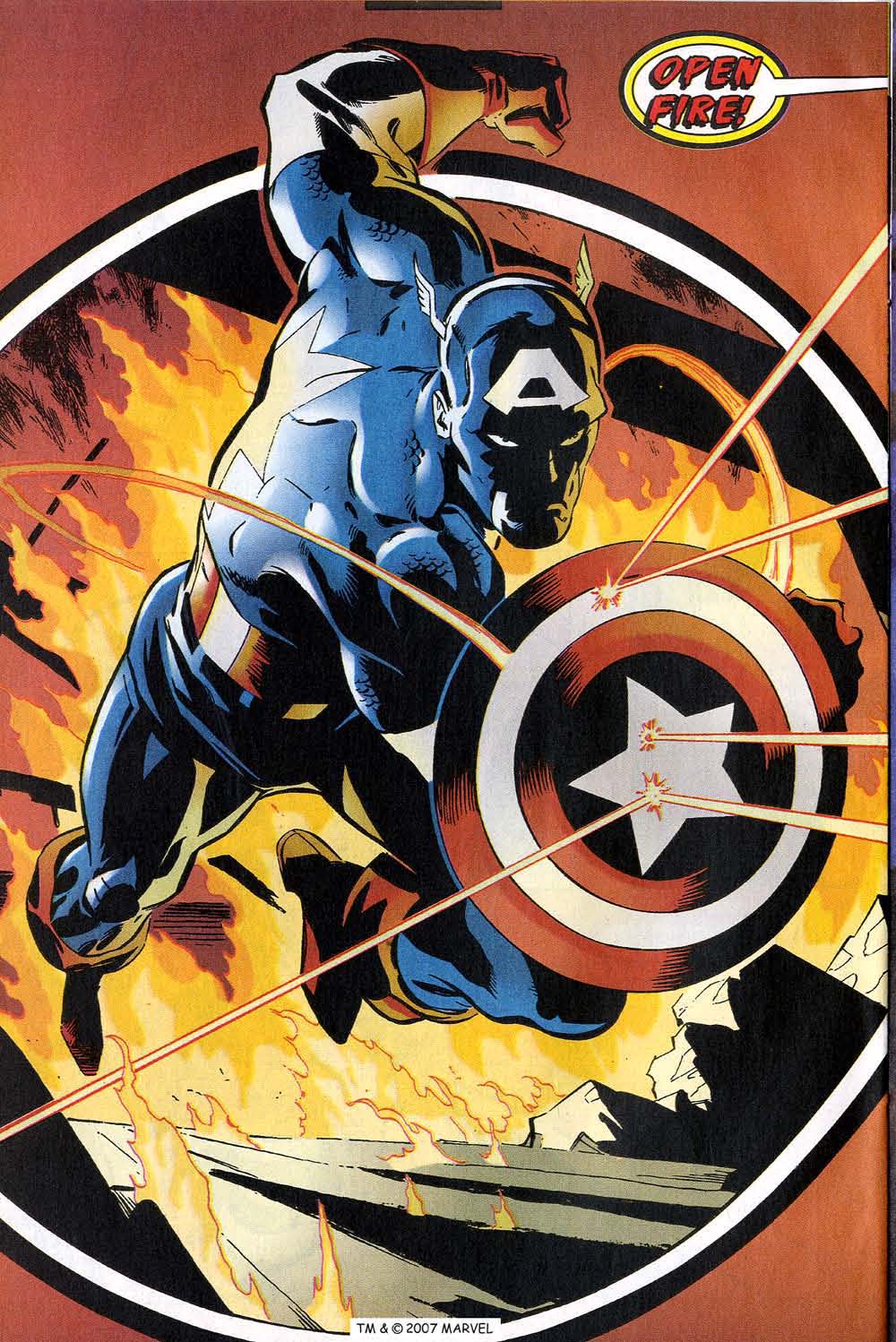
Thus, Captain America is solidified as a full-fledged icon and institution, not unlike Superman, Batman, and the stalwarts of the DC universe. Mark Gruenwald’s socially-conscious slant occasionally lacked finesse, but it certainly synched up with the well-meaning missteps and scatterbrained activism that characterized the late ’80s and early ’90s. Mark Waid would subsequently dial back the “after school special”-ness, writing Captain America as a hard-boiled, retro thrill ride without losing sight of Cap’s tireless optimism in the face of despair. These back-to-back seminal creative peaks for Captain America have primed the character to enter the New Millennium. Less likely for the core of his character to shaped by world events than he was under the likes of Stan Lee and Steve Englehart, the elder statesman that Steve Rogers has become affords him a certain legitimacy to weigh in and assert his authority in a way that other characters cannot. How this trump card will be played over the stories to come will prove to be a leading indicator of the series quality… not to mention a short hand evaluation of popular opinion as a whole.
Next time: It’s the Post-9/11 era, and you better believe Captain America has something to say! We’re nearing the finish line, folks. Don’t stray far, ’cause it’s exclusive to the Nation and your only Place… to Be.
